Can you go on a turtle nesting beach at night?
No. The nesting beaches of the National Marine Park of Zakynthos are open to the public from 07:00 until sunset, and nobody may stay on them between sunset and 07:00 the next morning. ARCHELON, the sea turtle protection society that has monitored the bay since 1984, adds that the beaches are guarded at night.
The rule follows the turtles' own timetable. Loggerhead females come ashore in the dark to dig their nests in the middle and back of the beach, and the hatchlings usually emerge at night, heading for the starlight reflected on the sea.
Light and noise are what get in the way. A female disturbed on the sand may go back to the sea without laying, and hatchlings crawl towards artificial lights instead of the water, so ARCHELON asks everyone to switch off or cover any light visible from a nesting beach and never to light a fire there.
For a night out, head for the bars and clubs along Laganas Road on the Laganas strip, or for the clubs of Argasi. Our hour-by-hour guide to the strip shows when each part of it switches on, and the nesting sand stays with the turtles until morning.
When is turtle season in Zante?
From May to October. In 2026, ARCHELON recorded the first nest on Zakynthos on 14 May 2026 at Gerakas, and the first hatchlings left a nest at Dafni on 14 July 2026.
Eggs hatch after 7–10 weeks, depending on how warm the sand is, so the last hatchlings reach the sea in September and October. In 2026, ARCHELON kept its Zakynthos team on the beaches until 15 October 2026.
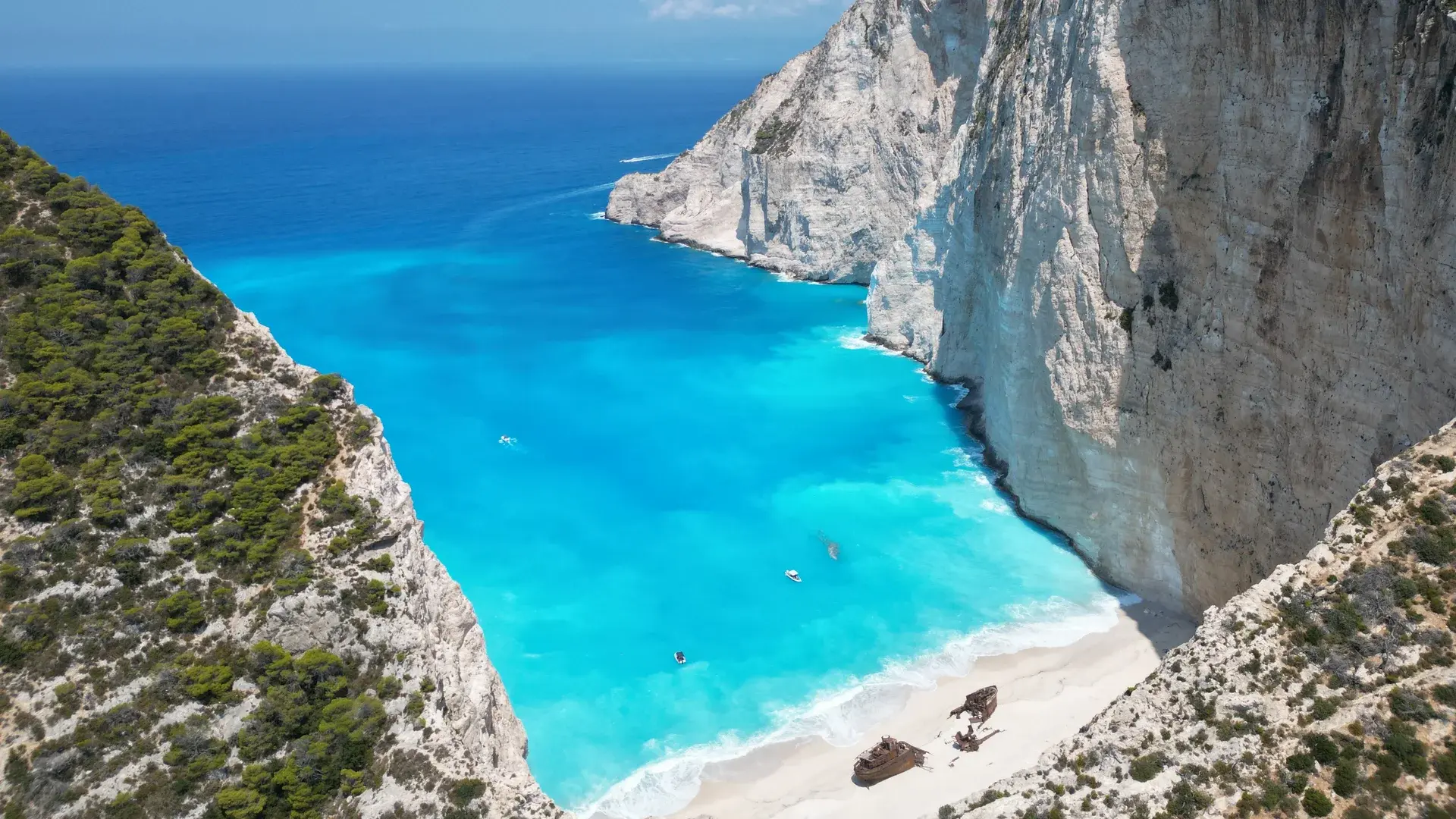
The numbers explain the care. ARCHELON counts an average of 1,200 nests a year on the six nesting beaches, listed one by one in our guide to Zante's beaches, and Greece's protected-areas agency estimates that the bay holds about 25% of the species' nests in the Mediterranean.
| Stage | 2026 season | On the beach |
|---|---|---|
| Nesting | First nest: 14 May 2026 | Females come ashore at night, when the beaches are closed |
| Incubation | 7–10 weeks per nest | Nests close to people are marked with a protective cage |
| Hatching | From 14 July 2026 | Hatchlings mostly emerge at night and walk to the sea alone |
| Last nests | Monitoring until 15 October 2026 | Hatchlings still reach the sea in September and October |
What are the rules on a nesting beach by day?
Keep to the band of sand by the water and leave the back of the beach to the nests. The park's 15 environmental wardens patrol the nesting beaches in summer, and their instructions come first, because each beach has its own measures.
Stay within about 5 m of the sea
Towels and games belong near the waterline; higher up the beach is where the nests are likely to be.
Build sand castles even closer
Play within 1–2 metres of the sea and flatten whatever you build before you leave: holes and mounds stop hatchlings on their way to the water.
Keep away from the cages
A nest close to people is marked with a cage. Don't touch it, and don't move the signs or the paths left for the hatchlings.
No umbrellas on three beaches
Gerakas, Dafni and Marathonisi allow no umbrellas except furniture the park has approved, and Marathonisi no furniture or private gear at all. On East Laganas, Kalamaki, Dafni and Gerakas, the sunbeds are cleared away every night.
No vehicles, horses or dogs
Cars, motorbikes, bicycles, horses and dogs are banned from every nesting beach.
Take nothing home
Leave the sand, shells, pebbles and the clay of the Gerakas cliffs where they are, and take your rubbish and cigarette butts with you.
Can you visit Sekania beach?
No: Sekania, the beach with the most nests, is an area of absolute protection with no public access at any time of day. The protected-areas agency counts around 1,000,000 visitors in the Bay of Laganas area during the tourist season from May to October, so these few habits are what keep the sand fit for nesting.
How do you watch turtles at sea without disturbing them?
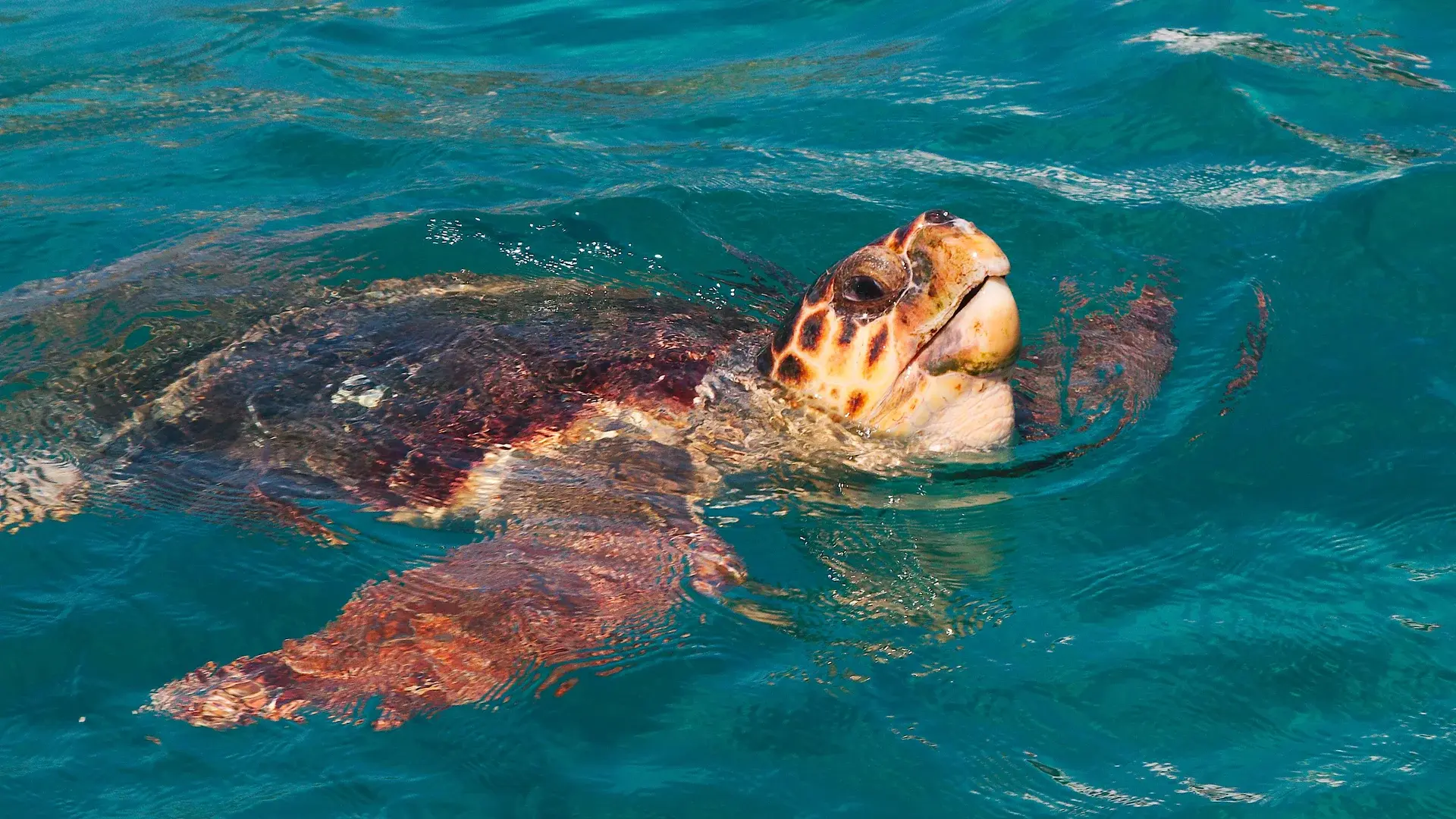
From a distance, briefly and from the side: the park asks you to keep at least 15 m from a turtle and never to approach it head-on. Don't feed it, touch it or swim with it.
Watch for no more than 15 min while the turtle is below the surface, or 10 min when it is close to it. Stay quiet, keep the boat still, and if the turtle seems stressed, move away.
On a turtle-spotting boat, the voluntary code of conduct endorsed by the park allows no more than 2 boats around one turtle, moving at under 2 knots, while every other boat waits 45 m away. It is worth asking about it before you book.
Buoys divide the park's 89 km² of sea into three zones. Jet skis, water-skiing and other motorised water sports are banned all year, as are spearfishing and recreational fishing; swimming, canoeing and pedal boats are the gentle ways the park invites you to enjoy the bay.
| Zone | Boats | Speed | Mooring |
|---|---|---|---|
| A | No boat movement at all | — | — |
| B | Allowed | Up to 6 knots | Not allowed |
| C | Allowed | Up to 6 knots | Allowed |
What should you do if you see hatchlings?
Let them reach the sea on their own and tell the park's wardens on the beach straight away. If no warden is around, ARCHELON's 24-hour sea turtle line, listed on its website, tells you what to do.
Keep to the side
Stand 3–4 metres to one side of the hatchlings, never in front of them, so their way to the sea stays open.
Smooth the way
Level the sand ahead of them and scrape off the hot top layer so that it doesn't burn them.
Give them shade
If the sun is on them, shade them with your body or a towel; if clouds or rocks already do, just wait.
Help only a lost one
If a hatchling crawls away from the sea, lift it with the sand it stands on and set it down about 5 m from the water to finish the walk.
What should you never do with a hatchling?
Never pour water on hatchlings, because they think they are already at sea and try to swim. Never carry them into the water either: the crawl across the sand builds the muscles they swim with.
Keep flashes, dogs and your own feet away. Artificial light disorients them, animals near them are a danger, and the upper part of the beach is where the other nests lie.